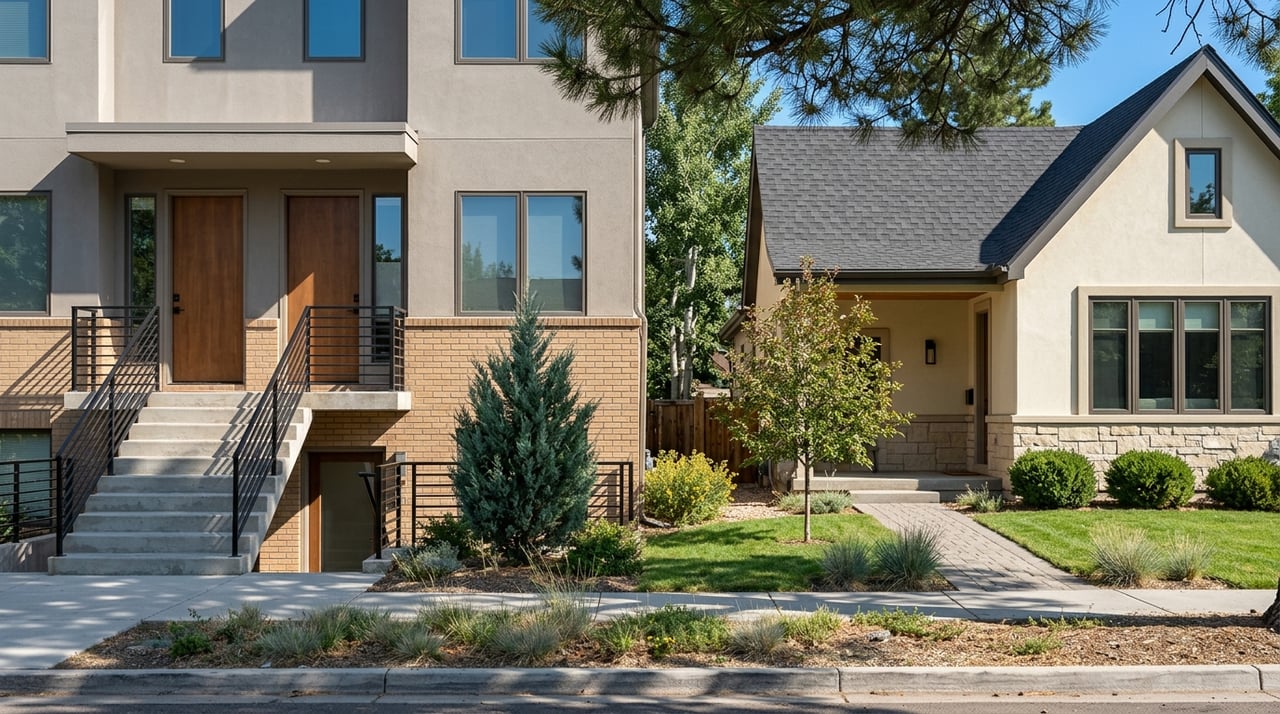
Buying your first home in Boulder can feel like choosing between two very different futures. Do you want the lower entry price and lighter upkeep that often comes with a condo, or the control and flexibility that usually comes with a single-family home? If you are weighing both, the good news is that Boulder’s housing patterns make the tradeoffs easier to see. Let’s dive in.
Boulder prices shape the decision
For most first-time buyers in Boulder, price is the first filter. According to the March 2026 Boulder MLS update, the median sales price was $1,299,950 for single-family homes and $520,000 for townhouse and condo homes.
That is a gap of about $780,000. In practical terms, that means condos often represent the lowest realistic entry point for buyers who want to own in Boulder, while detached homes usually require a much larger upfront budget.
The City of Boulder also frames detached homes as increasingly out of reach for many households, while attached homes are relatively more affordable. That local affordability context is a big reason first-time buyers often start their search by asking not just what they want, but what gives them the best path into the market.
Why condos appeal to first-time buyers
A condo can make a lot of sense if you want to get into Boulder with a lower purchase price and less day-to-day property work. In many cases, you may spend less time thinking about exterior upkeep, landscaping, and shared building maintenance than you would with a detached home.
That lower-maintenance lifestyle can fit especially well if you want to spend more time enjoying Boulder and less time managing a property. Boulder is well set up for that kind of living, with more than 300 miles of bikeways and recognition as a Gold-level Walk Friendly Community.
Condos also tend to line up with some of Boulder’s more urban and transit-oriented areas. If you like the idea of being closer to mixed-use districts, transit, biking routes, and a more connected daily routine, a condo may match your goals better than a yard-focused property.
Condo costs are more than the mortgage
The lower purchase price does not always mean the lower monthly cost. If a condo is part of a homeowners association, you need to look closely at dues, insurance responsibilities, maintenance obligations, and the possibility of special assessments.
Colorado’s Division of Real Estate says buyers in an HOA should review the association’s governing and financial documents after going under contract. That review matters because the true cost of ownership may be shaped by regular dues, one-time extra charges, and how much the association has saved for future repairs.
A few key HOA terms are worth knowing:
- Monthly dues: the regular fee paid to the association
- Special assessment: a one-time extra charge beyond normal dues
- Reserve fund: the association’s savings for larger future repairs
If reserves are weak, owners may face surprise costs later. That is why due diligence is so important when you are buying a condo or townhome in Boulder.
Smart HOA questions to ask
Once you are under contract, Colorado DORA says you are entitled to review the association documents. For a first-time buyer, these are some of the most useful questions to ask:
- What do the monthly dues cover?
- How healthy is the reserve fund?
- Have there been recent special assessments?
- Are any new assessments pending?
- What maintenance responsibilities fall on the owner versus the association?
- Can I review the governing and financial documents in full?
These questions can help you compare two condos that may look similar on the surface but carry very different long-term costs.
Why single-family homes still attract buyers
A single-family home usually gives you more control over the property and more flexibility over time. You are not typically sharing the same level of decision-making structure that comes with a condo community, and that can matter if you want more independence in how you live and plan ahead.
For some first-time buyers, that extra control is the main goal. You may want more privacy, more separation from neighbors, or simply a property that feels easier to shape around your needs over the years.
In Boulder, detached homes can also offer a different kind of long-term potential. The city allows attached and detached accessory dwelling units on lots with detached dwelling units in most zoning districts, which means some single-family properties may be adaptable later for added living space or future rental use, subject to city rules.
That does not mean every property will support every plan. It does mean a detached home can sometimes serve as a longer-term platform if you think your needs may change.
Single-family ownership means more direct responsibility
More control usually comes with more responsibility. With a detached home, you are generally taking on more of the repair risk and maintenance planning directly.
That can include exterior upkeep, landscaping, systems, and long-term capital repairs. Some buyers prefer that independence, while others would rather trade some control for a more shared maintenance model.
This is one of the clearest differences between the two property types. Condo ownership is often a shared-system model, while single-family ownership is more of a whole-lot model.
Where condos and detached homes show up in Boulder
Your choice is not only about the property itself. In Boulder, it is also closely tied to where those homes tend to be located.
Central Boulder fits condo-style living
The City of Boulder describes Central Boulder as the civic and cultural core of the city, centered on Downtown, Pearl Street Mall, University Hill, Boulder Creek, and Chautauqua. The city’s factsheet also shows that 84% of the subcommunity is within a quarter-mile of transit.
That kind of setting often fits condo buyers well. If you want a more urban environment with easier access to mixed-use areas and transportation options, Central Boulder may naturally push your search toward attached housing.
Boulder Junction supports a low-car lifestyle
Boulder Junction is another strong example of a condo-friendly area. The city describes it as mixed-use, pedestrian-oriented, and transit-oriented, with increased density, parking maximums, and unbundled parking.
Residents and employees there also receive EcoPass, BCycle, and CarShare benefits. For a first-time buyer who wants a low-maintenance, low-car lifestyle, that local setup can make condo living especially practical.
East Boulder includes more attached housing
East Boulder is also being guided toward attached and mixed-use housing in key areas. The city says the 55th and Arapahoe station area will be a walkable mixed-use neighborhood with 3- to 4-story buildings.
The city also envisions the Valmont Park East and West neighborhoods as a mix of townhomes, condominiums or apartments, and live-work units. If your search is focused on newer mixed-use patterns, these areas may offer more attached-home options.
North and South Boulder lean more detached
If you picture a more traditional detached-home setting, North Boulder and South Boulder are useful examples. City factsheets show 2,991 single-family detached units versus 555 attached units in North Boulder.
In South Boulder, the contrast is even more pronounced, with 4,974 detached units versus 484 attached units. Those figures help show that many of Boulder’s more traditional residential areas still lean heavily toward single-family housing.
How to match the home to your goals
The best first home is not always the biggest one or the one with the lowest monthly payment. It is the one that fits how you want to live now and what you want flexibility for later.
A condo may be the stronger fit if you are focused on a lower entry price, less upkeep, and a location that supports walking, biking, or transit use. That is especially true in Boulder, where central and mixed-use areas align well with attached housing.
A single-family home may be the better fit if you expect your space needs to grow, want more privacy, or value the ability to adapt the property over time. In Boulder, the possibility of an ADU on some detached-home lots adds an important local factor to that long-term planning.
A simple decision framework
If you are stuck between the two, start with a few direct questions:
- Do you want the lowest realistic entry point into Boulder ownership?
- Do you prefer less day-to-day upkeep?
- Are you comfortable reviewing HOA documents and shared financials?
- Do you want more control over the property?
- Do you expect your space needs to change over time?
- Would future flexibility matter more than a lower purchase price today?
In Boulder, these questions matter because the gap between condos and detached homes is so large. The tradeoff is not subtle here.
A good rule of thumb is this: condo usually means lower entry price and less upkeep, while single-family usually means more space, more control, and more flexibility for future changes. Your right answer depends on which benefits matter most to you.
If you want help comparing specific neighborhoods, monthly ownership costs, or the practical pros and cons of a condo versus a detached home in Boulder, Timothy Spong offers the kind of local, data-driven guidance that can make a first purchase feel much more clear and manageable.
FAQs
What is the main price difference between condos and single-family homes in Boulder?
- As of the March 2026 Boulder MLS update, the median sales price was $520,000 for townhouse and condo homes and $1,299,950 for single-family homes.
What should first-time condo buyers review in a Boulder HOA?
- You should review the HOA’s governing and financial documents, including monthly dues, reserve funds, recent assessments, pending assessments, and maintenance responsibilities.
Which Boulder areas are more likely to have condos?
- Central Boulder, Boulder Junction, and parts of East Boulder are more closely associated with attached, mixed-use, and transit-oriented housing patterns.
Which Boulder areas have more single-family homes?
- North Boulder and South Boulder both lean heavily toward detached housing based on city subcommunity factsheets.
Can a single-family home in Boulder offer more future flexibility?
- In many cases, yes. Boulder allows attached and detached ADUs on lots with detached dwelling units in most zoning districts, subject to city rules.
Is Boulder a good place for a low-car lifestyle?
- Boulder is well suited to car-light living, with more than 300 miles of bikeways and recognition as a Gold-level Walk Friendly Community.