Trying to decide between a townhome and a single-family home in Superior? You are not alone. Price, maintenance, privacy, and even the way local taxes work can push you in one direction. In this guide, you will see how each option fits the Superior market, what ongoing costs to expect, and how to do smart due diligence so you can buy with confidence. Let’s dive in.
Superior market context: price and supply
Superior is one of Boulder County’s higher-priced communities. Recent snapshots show typical values around the high $800,000s, and county data points to a clear price premium for single-family homes over attached products like townhomes and condos. County-level reporting also shows that townhouse and condo medians sit materially below single-family medians, which is a useful proxy when precise town-level splits are not published. You should still compare neighborhood comps before deciding. The Colorado Association of REALTORS® Boulder County report is a good trend source for property-type differences and appreciation patterns. You can review county trend context in the Boulder County Local Market Update.
What this means for you: expect to pay more for a single-family home in Superior, especially in established neighborhoods. Townhomes often offer a lower entry price, but your monthly cost depends on HOA dues and any metro-district taxes, not just your mortgage.
Cost basics: what changes by property type
Total ownership cost includes more than the purchase price. You will budget for mortgage, property taxes, insurance, and utilities. In many Superior communities you may also pay HOA dues, metro-district taxes, or both. Those two items can shift your monthly and annual budget in meaningful ways.
HOA vs. metro districts in Superior
- HOAs: A homeowners association manages common areas and enforces community rules. Dues can cover things like landscaping, snow removal for shared areas, exterior maintenance, pools, or clubhouses. Colorado’s HOA Information and Resource Center explains how HOAs operate and what records you can review as a buyer. See the state’s overview at the Colorado Division of Real Estate HOA Center and the buyer guidance on purchasing in an HOA.
- Metro districts: A metropolitan district is a local government under Colorado Title 32 that finances and maintains infrastructure. It collects property-tax mill levies that appear on your annual tax bill, often to repay bonds. Learn how districts are formed and governed at the Division of Local Government’s special district page.
- Many Superior buyers pay both: Several Superior neighborhoods include metro districts alongside HOAs. Boulder County’s published contact list confirms multiple Superior-area districts. It is a smart move to check for district names and contacts in the county tax-district list before you write an offer.
Why this matters: HOA dues are set by a private association and can change through the budget and assessment process. Metro-district taxes are set through public mill levies tied to district finances and debt. Both affect your monthly cash flow and resale appeal.
Insurance differences to factor in
Insurance needs often differ between townhomes and single-family homes. Many attached communities rely on a master policy that covers some or all of the building exterior. Owners then carry an HO-6 policy for interiors and personal property. Single-family owners typically carry an HO-3 policy that covers the full structure and lot. The exact split depends on what the master policy covers, so review it closely. For a quick primer on master policy types and owner coverage, see this overview of HOA master insurance policies.
Estimating your monthly carrying cost
Build a side-by-side estimate for any listing you are considering:
- Mortgage: principal and interest for your down payment and rate.
- Property taxes: look up last year’s taxes and identify all districts on the bill, including any metro-district mills.
- HOA dues: include monthly dues and any recent special assessments.
- Insurance: quote based on the HOA master policy and your lender’s requirements.
- Utilities: estimate electricity, gas, water, and trash based on past bills if available.
This exercise helps you compare an attached home with dues and metro taxes against a single-family home with higher insurance and full exterior maintenance.
Lifestyle and maintenance tradeoffs
Townhomes: convenience and community amenities
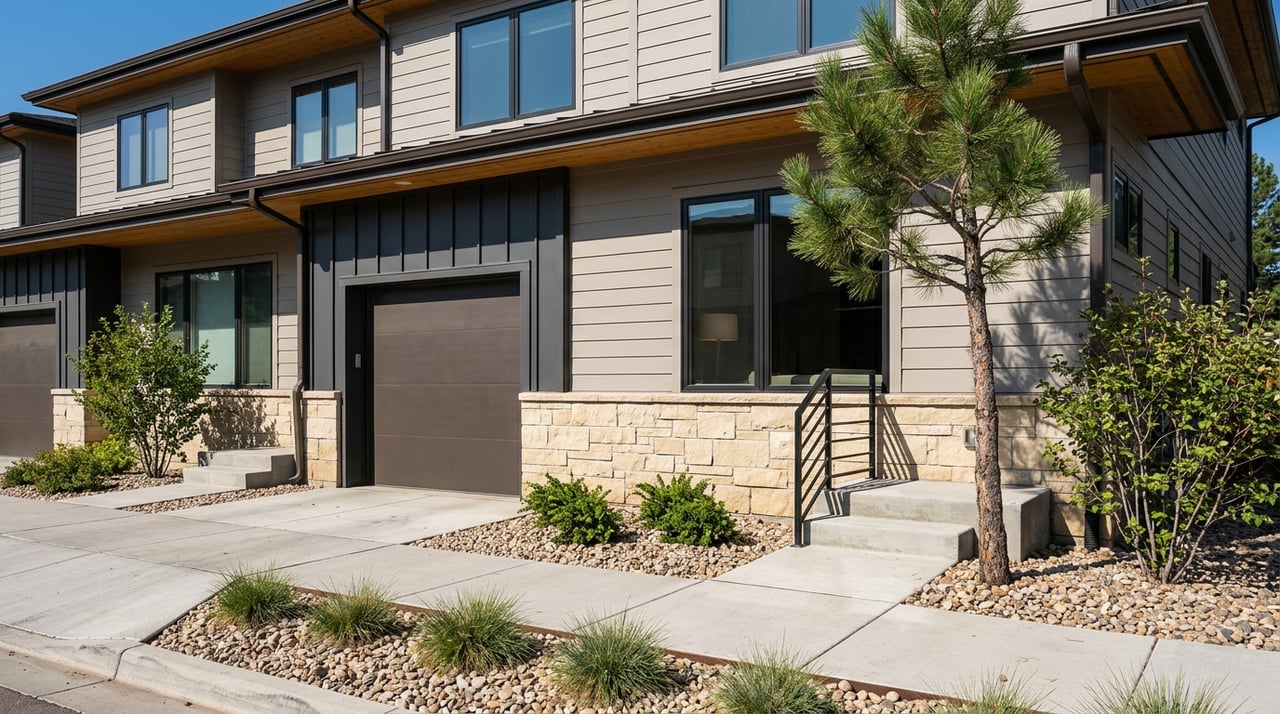
Townhomes can deliver a lower entry price, less exterior upkeep, and a lock-and-leave lifestyle. Dues often cover landscaping, snow removal for common areas, and sometimes exterior maintenance. Many projects add amenities like trails, small parks, or a pool. On the flip side, attached walls and HOA rules can limit your privacy and freedom to remodel. Always confirm the scope of exterior maintenance in the HOA budget and policies so you know exactly what is covered.
Single-family homes: space and control
A single-family home gives you private yard space, better separation from neighbors, and full control over exterior choices. These homes tend to carry higher ongoing maintenance costs and time commitments because you handle the roof, siding, driveway, and landscaping. In Boulder County trends, single-family homes often show steadier pricing over cycles, but they also require a larger up-front budget in Superior.
Which option fits your goals in Superior
- You want the lowest monthly outlay: Start with attached homes, but calculate your full monthly number including HOA dues and any metro-district tax mills. A lower purchase price can be offset by higher dues or district levies.
- You value convenience and travel often: Townhomes that include exterior maintenance, landscaping, and snow removal can save you time. Review the HOA’s maintenance matrix and reserve study to gauge future costs.
- You want privacy, outdoor space, and long-term flexibility: A single-family home may serve you better, especially if you plan outdoor projects or value yard space. Expect higher maintenance and insurance, and consider long-run resale potential.
- You invest with a long horizon: Both property types can work. Look closely at project financials for attached housing and confirm district mill levies for any property. Reserves, litigation history, and tax burdens can influence tenant appeal and exit value.
Resale and financing considerations
Price sensitivity by property type
County reporting shows that townhouse and condo segments can be more sensitive to interest rates and project-specific issues like insurance costs or special assessments. Single-family pricing has been steadier in the current cycle. For trend context by property type, review the Boulder County Local Market Update.
Time on market and neighborhood variation
Days on market in Superior varies by neighborhood, price point, and property type. Recent snapshots have hovered around several months on market for many listings, but individual neighborhoods can move faster or slower. Ask your agent for fresh comps and real-time days-on-market data before you price or write an offer.
Financing for attached housing
Some lenders apply additional reviews to townhome and condo projects, including reserve strength, insurance coverage, and any litigation. Buyers using FHA or VA should verify whether the project meets program requirements. Start that conversation early and have your agent request the HOA resale packet so your lender can review the documents. The state’s HOA center outlines buyer document rights and what to request when purchasing in an HOA.
Metro-district taxes and your future buyer pool
Metro-district mills add to the annual tax bill and can influence a buyer’s monthly payment. Clear disclosure helps. Before you list or buy, gather the current mill levy, any bond debt schedules, and a plain-language estimate of the dollar impact on taxes. State resources explain district oversight, and local reporting has highlighted buyer surprises when levies are large. Read a balanced overview of these issues in Denver7’s coverage of metro districts and consult the Division of Local Government for filings and transparency rules.
Due-diligence checklist for Superior buyers
Use this checklist for any townhome or single-family you are considering in Superior. It will help you surface hidden costs and avoid surprises.
- Property taxes and districts:
- Pull a recent tax bill and identify every taxing district on the parcel, including any metro or special districts. To find district boundaries and names, use the DOLA special district map and confirm contacts in the Boulder County tax-district list.
- If the property is in an HOA:
- Request CC&Rs, bylaws, current budget, last audited financials, the most recent reserve study, the current assessment schedule, and meeting minutes from the last 12 months. The state outlines buyer document access at the Colorado DRE HOA guidance page.
- If the property lies within a metro district:
- Ask for the district service plan, current mill levy, outstanding debt and debt-service schedule, and recent meeting minutes. Learn more about roles and disclosures at the Division of Local Government site. For general education, the Metro District Education Coalition shares homeowner FAQs at the MDEC site.
- Insurance check:
- Get an insurance quote after reading the HOA master policy. Confirm whether your policy must cover walls-in, betterments, or full interior finishes. For a refresher on master policy types, see HOA master insurance policies.
- Financing check:
- Ask your lender about any condo or townhome project reviews and whether your loan program has specific requirements. Provide the HOA resale packet as early as possible to avoid delays.
Your next step in Superior
The right choice comes down to how you live, what you value, and what the numbers say. If you want a calm, data-driven comparison of specific Superior neighborhoods and listings, let’s build a side-by-side monthly budget and review HOA and metro-district documents together. When you are ready, reach out to Timothy Spong to get local, concierge-level guidance tailored to your goals.
FAQs
What is a metro district in Superior and how does it affect my taxes?
- A metro district is a local government that funds infrastructure through extra property-tax mill levies, which appear on your tax bill and can raise your annual cost; learn more at the state’s special district page.
Do Superior townhomes always have an HOA and what might it cover?
- Most townhomes are in HOAs that may cover common-area maintenance, some exterior work, amenities, and management; confirm details in the documents and see state guidance at the Colorado HOA Center.
How do insurance needs differ for a Superior townhome versus a single-family home?
- Townhomes often rely on an HOA master policy plus an owner HO-6 for interiors, while single-family owners carry a broader HO-3; review the master policy to size your coverage as explained in this HOA insurance overview.
Which tends to hold value better in Boulder County: townhomes or single-family homes?
- County trends show single-family pricing has been steadier in this cycle, while townhome/condo segments can be more rate- and project-sensitive; see the Boulder County market update.
How can I check if a specific Superior listing has metro-district taxes?
- Look up the parcel’s taxing districts on the county tax bill and cross-reference the district name using the DOLA special district map and the Boulder County tax-district list.
What documents should I ask for when buying into a Superior HOA community?
- Request CC&Rs, bylaws, budgets, audited financials, the reserve study, the current fee schedule, and 12 months of board minutes; the state outlines buyer rights at the Colorado DRE HOA guidance page.