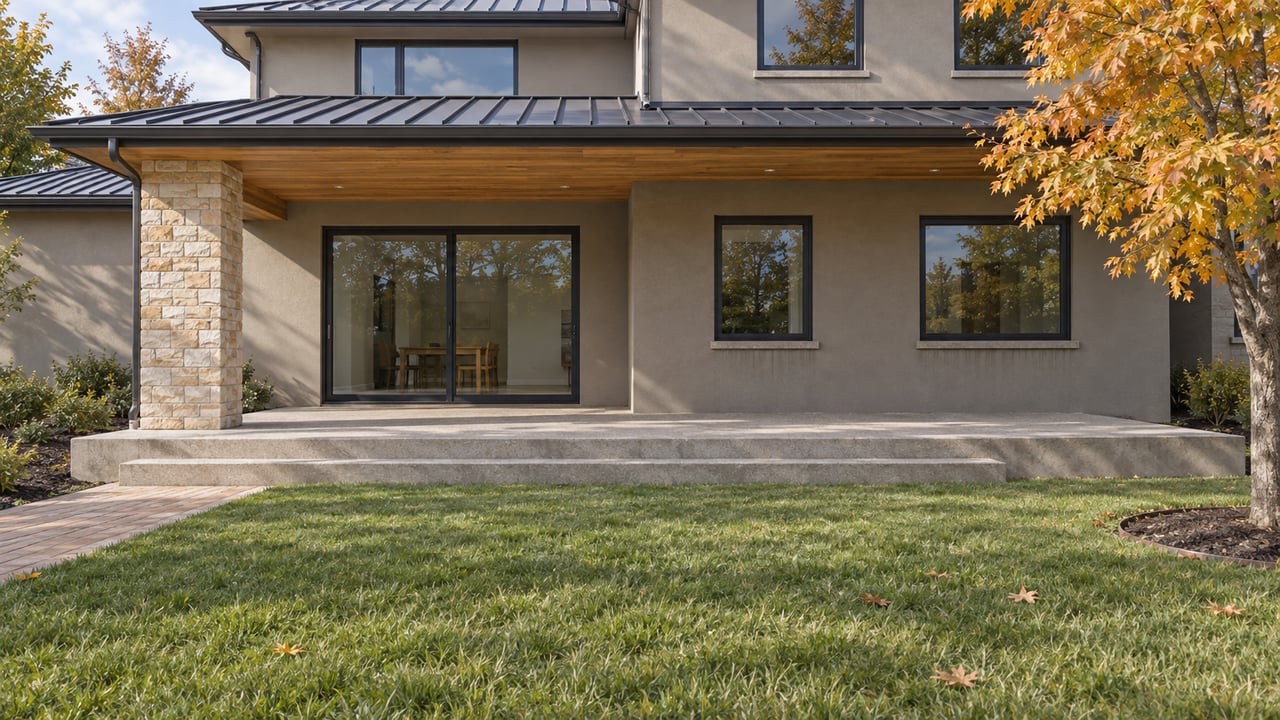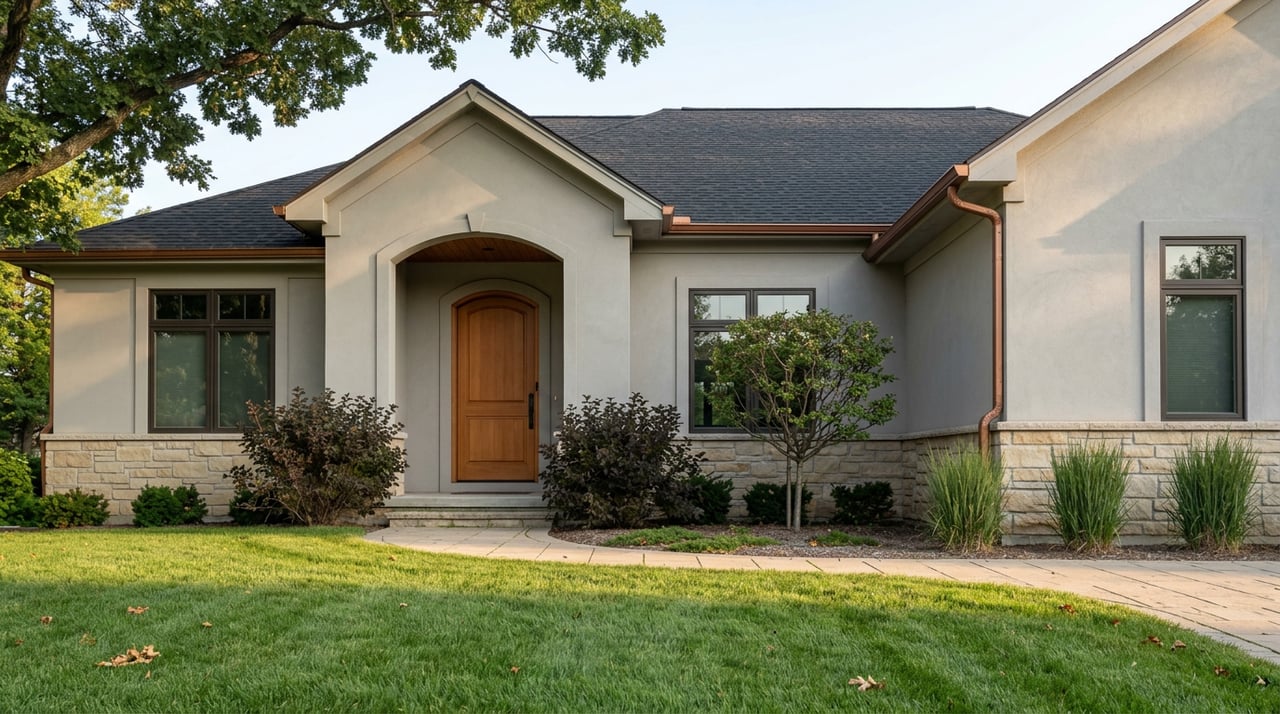
Pull up two Broomfield listings priced within twenty thousand dollars of each other, both built in the last fifteen years, both zoned to Boulder Valley schools, both sitting on similar-sized lots. On paper they read like the same purchase. Pull the tax certificates on each one and you may find an annual gap of over a thousand dollars that has nothing to do with square footage, finishes, or even which school district serves the address. It comes from a line item most buyers never ask about until the tax bill lands in February.
That line item is the metro district bond, and in Broomfield it can move your carrying cost more than the school district assignment everyone assumes is driving the number.
The Median Price Is Already Arguing With Itself
Before getting to tax lines, it helps to notice that the headline number buyers anchor to is not as stable as it looks. Depending on which portal you check this summer, Broomfield's median comes out differently: one recent three-month window through June 2026 put the median sale price at $682,000, up 6.2% year over year, while an August 2026 snapshot of asking prices showed a median of $609,000, down 6% from the year before. A separate home-value index for the same period landed around $632,000, down slightly year over year. These are not contradictory so much as they are measuring different things: sold prices versus list prices versus modeled values, on different time windows. The takeaway for a comparison shopper is simple. The median is a starting point, not a verdict, and it says nothing at all about what a specific parcel will cost you to hold.
Every Tax Bill Is Actually Three Numbers Stacked
Colorado calculates property tax with a formula that has three separate movable parts: the assessor's actual value, a statewide residential assessment rate set by the legislature, and a local mill levy set by whatever combination of taxing authorities covers your specific address. Change any one of the three and the bill changes, even if the other two hold still.
Broomfield's own Property Tax 101 explainer makes a point of clarifying where that third number actually goes. The City and County of Broomfield's own mill levy has sat at 28.969 since 2001, unchanged for over two decades. But the city is upfront that even though residents write the check to Broomfield, only about 24% of that payment funds city and county services. The rest is passed through to school districts, fire protection districts, and special districts layered on top of your specific parcel.
Even though you write your property tax check to the City and County of Broomfield, only 24% of that is used for city and county services. The rest pays for school districts, fire departments, and metro districts.
That distinction matters more in Broomfield than in most Front Range cities, because of what sits inside that other 76%.
The School District Everyone Assumes Matters Turns Out to Be the Smaller Variable
Broomfield's own December 2025 mill levy report, which lists the tax rate for every district in the city, includes two tax areas that are both zoned entirely to Boulder Valley RE-2 schools. Strip out everything except the shared county, water, and fire charges and the two areas look nearly identical. Add in the local metro district and one area's total mill levy comes out to 148.449, while the other lands at 124.428, a 24-mill gap between two parcels attending the same schools.
Now compare both of those to a separate Broomfield tax area zoned to Adams 12 Five Star Schools instead. That area's published school-only levy is 73.51 mills on its own, well above the roughly 48 combined mills that fund Boulder Valley's general, bond, capital, abatement, and transportation levies together. Yet once you add the Adams 12 area's city, fire, and drainage charges, its total comes to about 118 mills, lower than either of the two Boulder Valley examples above.
Run that gap through the actual math and it stops being an abstraction. For the tax year billed in February 2026, the state set the residential assessment rate at 7.05% for school mill levies and 6.25% for everything else, a split your title company or the Broomfield Assessor's office can confirm for your specific parcel. Applied to a $650,000 home, a 30-mill difference works out to somewhere in the neighborhood of $1,200 to $1,400 a year in property tax, paid indefinitely, for two homes that could otherwise look identical on a listing sheet. That is not a rounding error. It is closer to a car payment.
This is the finding worth sitting with: the school district assignment, the variable most relocation guides tell you to check first, explains less of the total tax gap in Broomfield than the metro district overlay does. Confirm any of these figures against your own notice of valuation before treating them as settled. Mill levies are finalized every December and can shift year to year.
The Overlay Nobody Puts On the Listing Sheet
Metro districts exist because Colorado communities use them to finance the roads, parks, and utilities inside new subdivisions without raising city-wide taxes to pay for infrastructure that benefits one development. The district issues bonds.
Broomfield has several of these operating today, each governing its own patch of the city. The tax authority contact list the city maintains includes Anthem West Metro District and the 800 Hoyt Metro District by name, alongside the Broomfield Village Metro District #2 and a Midcities-area district tied to a Greystar-built community, both of which show up directly in the mill levy figures above. None of these appear as a line item on a typical listing photo or a portal's price-per-square-foot calculation. They surface on the title commitment and the tax certificate, which is exactly where a buyer comparing two similarly priced Broomfield homes should be looking before assuming the lower price per square foot is the better deal.
A few of the named subdivisions worth knowing if you're comparing addresses:
- Wildgrass, near McKay Lake, is zoned to Boulder Valley schools including Monarch High School.
- McKay Landing falls within Broomfield High School's Boulder Valley attendance area.
- Anthem carries its own Anthem West Metro District, a separate financing authority from the examples above.
- Arista, Broadlands, and Redleaf each sit in their own combination of school and special district boundaries.
None of this is a judgment on any one district or subdivision. It is a reminder that in Broomfield, the taxing authority stack is decided parcel by parcel, not neighborhood by neighborhood in any way a buyer can assume from the outside.
Six School Districts, One City
Part of why this fragmentation exists at all traces back to how Broomfield was built. The city's own description of itself confirms that residents are served by six separate school districts: Boulder Valley, Adams 12 Five Star, Weld County, Jefferson County, Brighton, and St. Vrain Valley. That is an unusually wide spread for a city of Broomfield's size, and it traces back to Broomfield's status as a single consolidated city and county carved out of surrounding county territory. The tax and school boundaries never fully reset when the city did.
For a buyer, the practical result is that the phrase "Broomfield schools" describes six different funding arrangements depending on which side of a boundary line your specific address falls on, and boundary verification through the district itself, not the listing description, is the only way to confirm which one applies.
What This Means If You're Comparing Broomfield Addresses
Price per square foot corrects for size. It does not correct for the mill levy sitting underneath the home. Two Broomfield listings at the same price, in the same school district, can carry different long-term costs because of a metro district bond that has nothing to do with the home itself and everything to do with which subdivision financed its own infrastructure and how.
Before comparing two Broomfield properties on price alone, it is worth pulling the notice of valuation or asking the listing side for the tax certificate, and reading the title commitment for any recorded metro district service plan. Both documents exist specifically so this information does not stay hidden until closing.
A Few Common Questions
Does a higher mill levy mean a neighborhood is a worse buy? Not on its own. Metro district levies fund the infrastructure that made a subdivision buildable in the first place. The levy is a cost to weigh, not a verdict on the neighborhood.
How do I find out which tax area a specific home sits in? The Broomfield Assessor's office publishes tax area numbers and their corresponding mill levies, and the same figures appear on the property's notice of valuation each year. A title company can also confirm any recorded metro district for a specific address before you write an offer.
If you are comparing Broomfield addresses and want a second set of eyes on what a specific tax area actually costs before you write an offer, that is exactly the kind of homework Timothy Spong walks through with buyers every week. Let's Connect.
This article is general information, not legal, tax or financial advice. Consult a qualified professional about your situation.